
From a military experiment with 4 computers in California, to a network of 6 billion users that dominates every aspect of our lives. The history of the internet is not merely a technological evolution — it is the greatest revolution in human communication since the invention of writing. Join us on a 57-year timeline that changed everything.
🔬 The 1960s: The Dream of the “Galactic Network”
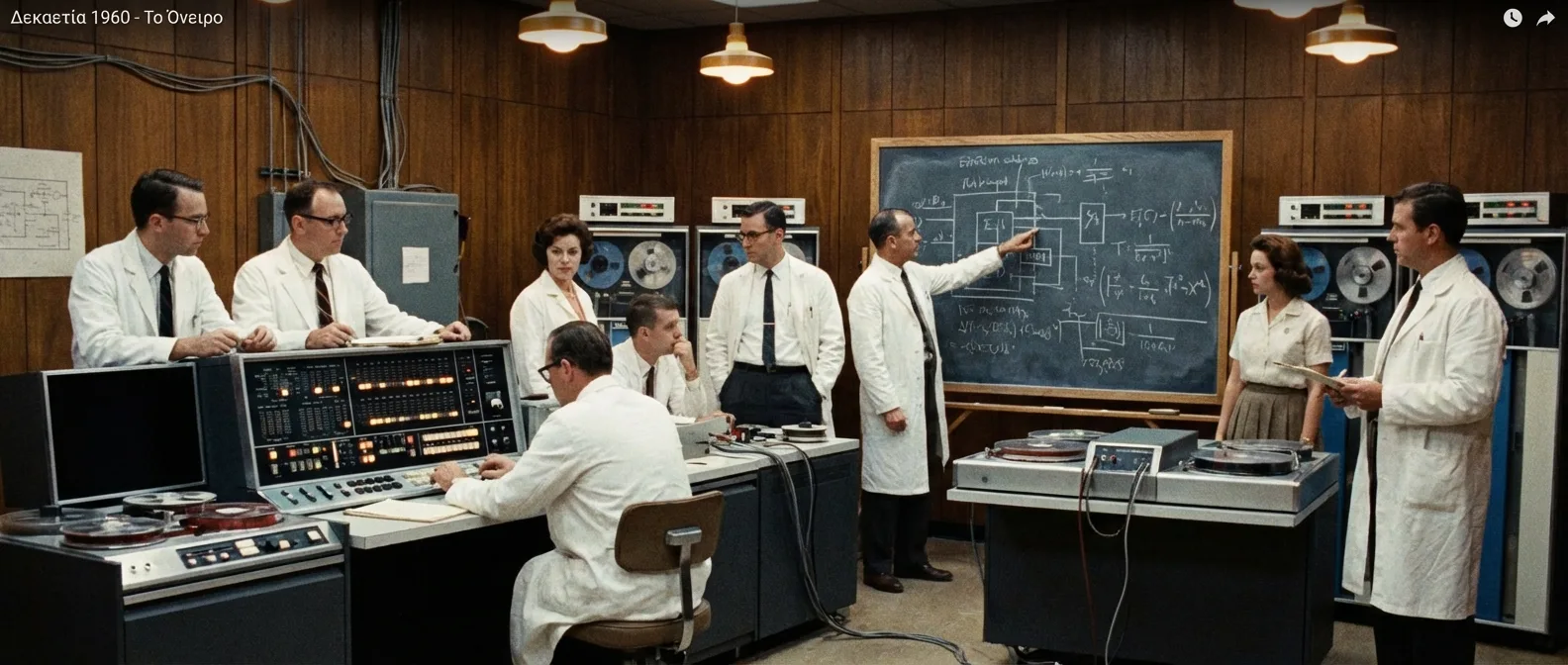
The era of mainframes — where the dream of networking was born
The story begins in the depths of the Cold War. America, terrified by the launch of the Soviet Sputnik (1957), establishes ARPA (Advanced Research Projects Agency) — the organization that would give birth to the internet. The original mission? To ensure that American communications would survive even after a nuclear strike.
"I imagine an intergalactic network of computers, a collection of interconnected nodes through which anyone could access data and programs from anywhere."
In 1961, Leonard Kleinrock at MIT publishes the first academic paper on the theory of packet switching — the idea that data can be “broken” into small packets, travel via different routes, and be reassembled at the destination. This idea was revolutionary: unlike the telephone network (circuit switching), it didn't require a dedicated connection.
Meanwhile, in Britain, Donald Davies at the National Physical Laboratory (NPL) independently conceives the same idea — he is the one who would coin the term "packet". Two continents, one idea.
💡 Did you know?
Kleinrock later revealed that the idea of packet switching came while he was trying to figure out how multiple users could simultaneously share a communication line — a problem impossible with the traditional telephone network.
In 1965, Lawrence Roberts (MIT) creates the first WAN connection in the world, linking a computer in Massachusetts to one in California via telephone line. The speed? Laughable today — but back then it was like magic.
In 1967, Roberts presents the plan for ARPANET at a conference. The proposal: a computer network that would use packet switching, with specialized mini-computers (IMP — Interface Message Processors) as intermediate nodes. No one yet imagines that this military program would change the world.
📡 October 29, 1969: “LO” — The Birth of the Internet
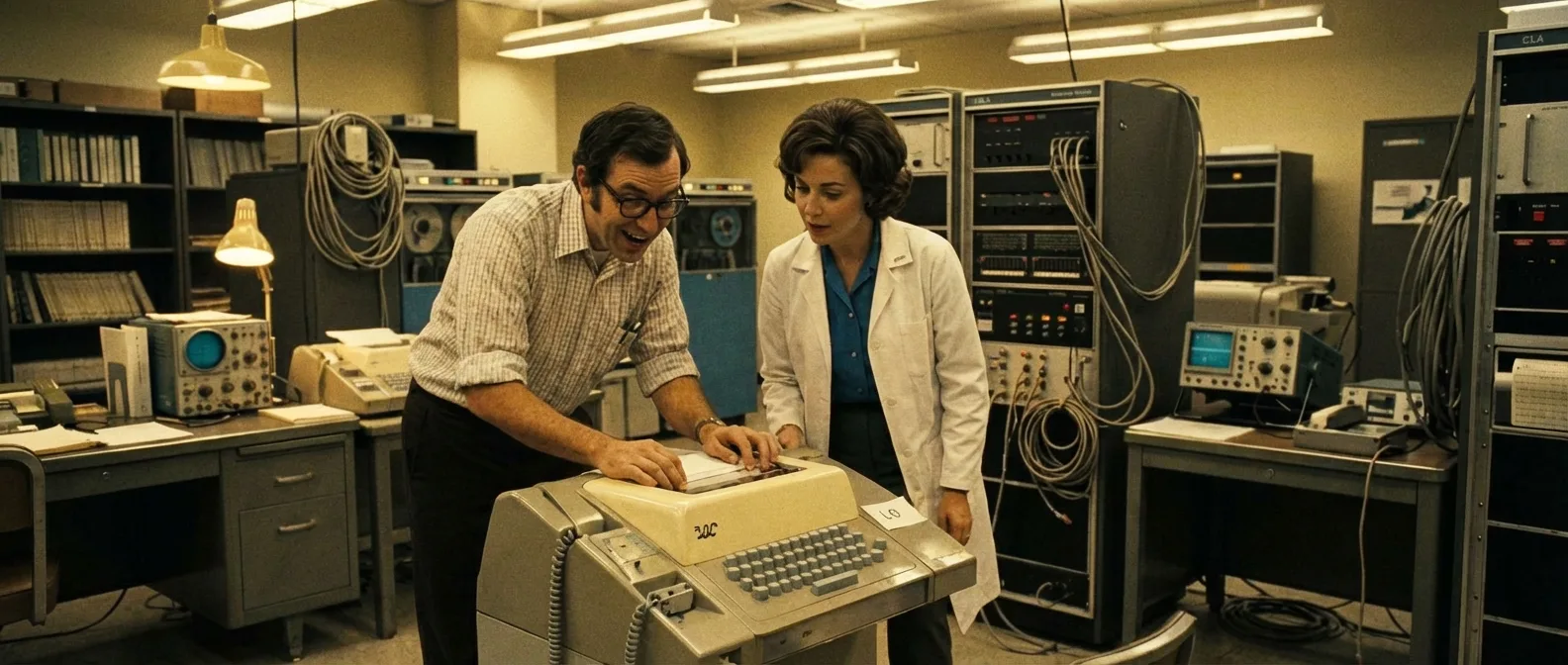
October 29, 1969 — The moment ARPANET was born
The most important date in the history of the digital age. At 10:30 PM, student Charley Kline at UCLA types the word "LOGIN" to connect to the computer at Stanford Research Institute (SRI), 550 kilometers away.
What happened? He typed "L"... the system recognized it. He typed "O"... it went through. He typed "G"... and the computer crashed.
"The first message on the internet was 'LO' — like 'Lo and behold.' We couldn't have thought of a more fitting first message even if we tried."
One hour later, they try again — and this time the word “LOGIN” is completed. ARPANET is born. By Christmas 1969, four nodes are connected: UCLA, SRI, UC Santa Barbara, and University of Utah.
📊 ARPANET in Numbers
📧 The 1970s: Email, TCP/IP, and Globalization
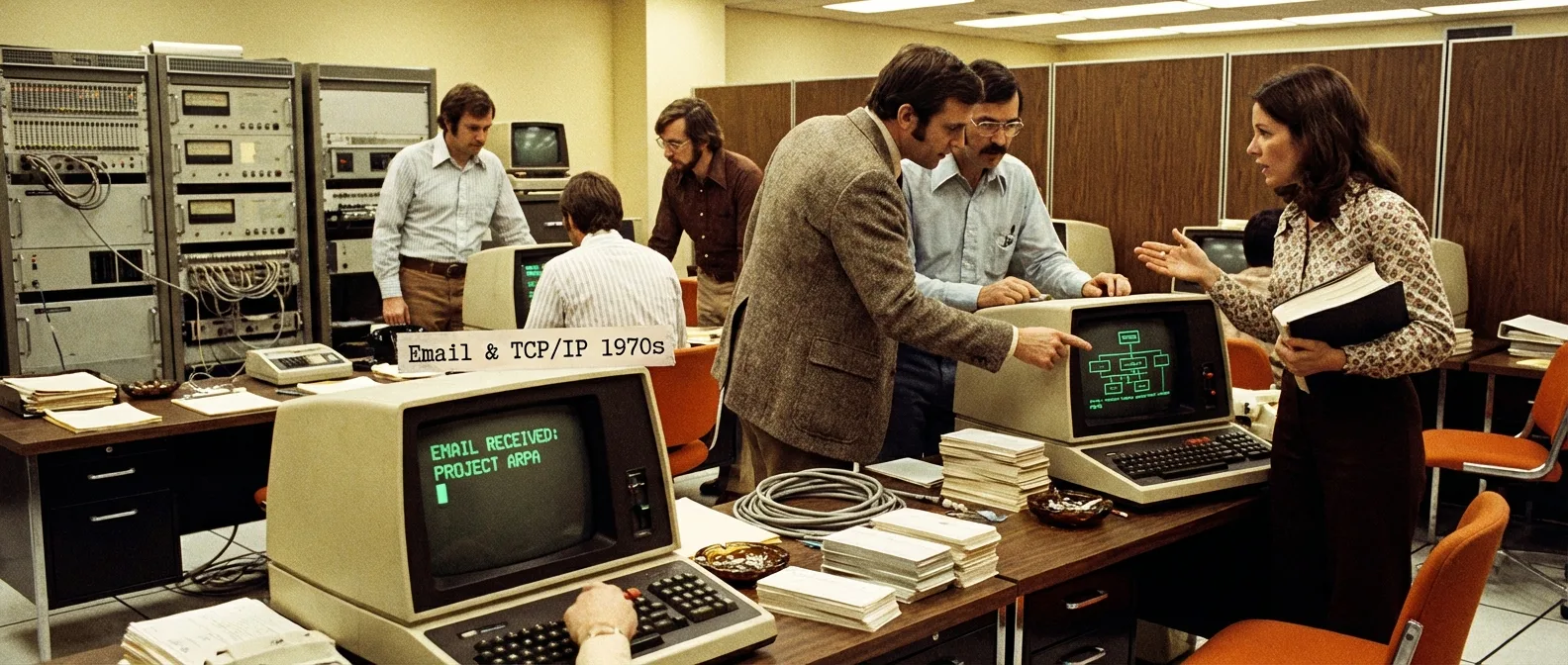
The decade of email and TCP/IP — researchers who laid the foundation for the future
If the '60s were the dream, the '70s are the foundation. Three events change everything:
1971: The Invention of Email
Ray Tomlinson, an engineer at BBN Technologies, creates a program that allows users on different computers to send messages to each other. And he invents something even more important: he uses the @ symbol to separate the user from the host computer. Fifty years later, @ is one of the most recognizable symbols on the planet.
📌 Fun Fact
Tomlinson never remembered exactly what the first email said. “It was something like QWERTYUIOP or something equally meaningless,” he stated. No one expected it would become one of the most important inventions of the century.
1972-1973: International Expansion
In October 1972, Robert Kahn gives a public demonstration of ARPANET at a conference in Washington — and the world goes crazy. In 1973, something historic happens: the first international connections — Norway and Britain connect to ARPANET. The “network” is no longer American — it goes global.
1974: The Invention of TCP/IP
Vint Cerf and Robert Kahn publish a paper that would change everything: "A Protocol for Packet Network Intercommunication". They describe the TCP (Transmission Control Protocol) — the way networks with completely different architectures can “talk” to each other. In this paper, the word "internet" (inter-network) is used for the first time.
In 1978, TCP is split into two parts: TCP (data transport) and IP (packet routing). This duo — TCP/IP — is still today the “language” that the entire internet speaks.
📨 Email (1971)
Ray Tomlinson invents email and the @ symbol. Today, over 350 billion emails are sent daily worldwide.
🌐 TCP/IP (1974)
Cerf & Kahn create the “language” of the internet. Every device that connects today uses TCP/IP.
🇳🇴 International Nodes (1973)
Norway and Great Britain connect to ARPANET. The network crosses American borders.
🖥️ The 1980s: Maturation — DNS, NSFNET, and Flag Day
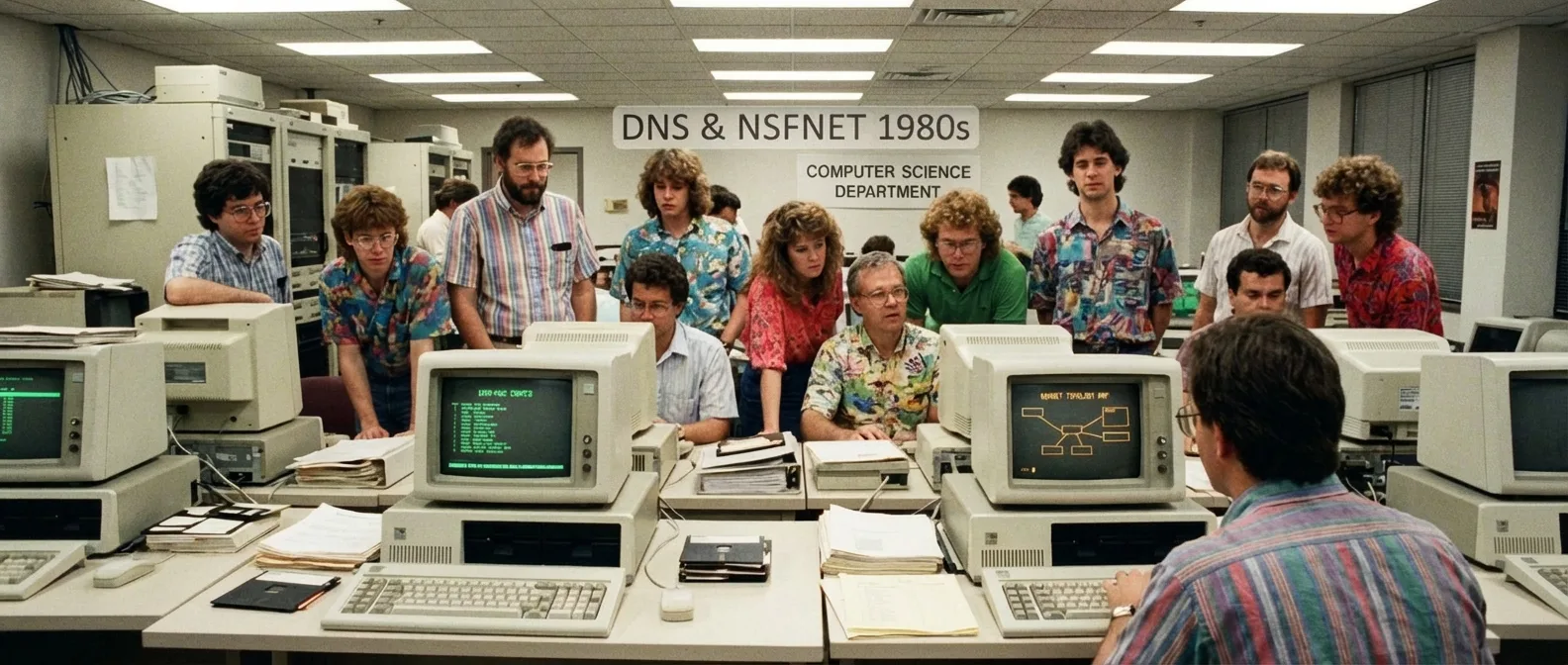
The university labs of the '80s — where DNS was born
The '80s are the era when the internet acquires the infrastructure we still use today.
January 1, 1983: “Flag Day”
One of the boldest technological decisions in history: The entire ARPANET switches simultaneously from the old NCP protocol to TCP/IP. There is no transition period — either you switch, or you get disconnected. This day is considered the "birth" of the modern internet. That same year, the military segment separates (MILNET), and ARPANET becomes purely research-oriented.
1983: The Invention of DNS
Paul Mockapetris invents the Domain Name System (DNS) — the system that translates names (e.g., greverse.com) into numerical IP addresses. Without DNS, we would have to remember numbers like "142.250.185.78″ instead of “google.com.” Can you imagine?
1986: NSFNET — The Backbone
The National Science Foundation creates NSFNET, a backbone network connecting 5 supercomputing centers across America. Initial speed: 56 kbit/s. It may sound funny, but this was the “highway” of the internet. By 1991, the speed was upgraded to 45 Mbit/s (T3) — nearly 1,000 times faster.
⚡ Internet Speed Evolution
By the end of the decade, 213 hosts were connected to ARPANET. The number sounds small, but each one represented an entire university or research center with hundreds of users.
🕸️ 1989-1991: Tim Berners-Lee and the Birth of the World Wide Web
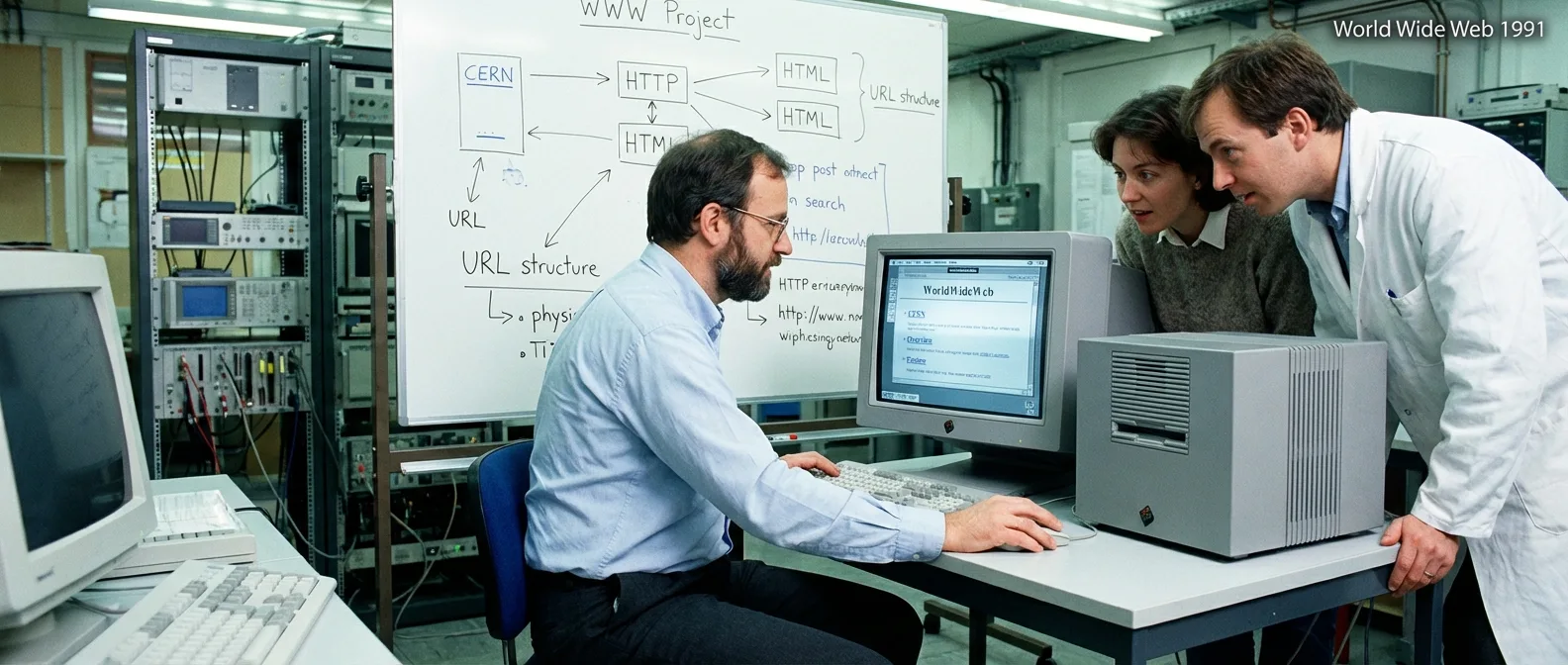
CERN — where the World Wide Web was born in 1989-1991
Many people confuse the internet with the “Web.” They are not the same thing. The internet is the infrastructure — the cables, the protocols, the routers. The World Wide Web is an application that runs on top of the internet, like email, FTP, or later streaming.
In March 1989, British physicist Tim Berners-Lee, working at CERN (Geneva), writes a proposal titled "Information Management: A Proposal." His supervisor notes in the margin: "Vague but exciting."
"I didn't need to ask anyone's permission. That was the magic. The internet was designed so that there was no central control — and that very design allowed the Web to be born."
Berners-Lee invents three things simultaneously:
📝 HTML
HyperText Markup Language — the formatting language used by every website in the world. Simple, elegant, universal.
🔗 URL
Uniform Resource Locator — the unique “address” of every page. The idea that every piece of information has a permanent location was genius.
📡 HTTP
HyperText Transfer Protocol — the way a browser requests and receives pages. Even today we see “https://” in every URL.
In December 1990, Berners-Lee creates the first web server (a NeXT workstation at CERN) and the first web browser. The first website in the world (info.cern.ch) explained... what the World Wide Web is. A commendable meta-reference.
In August 1991, Berners-Lee opens the Web to users outside CERN. Meanwhile, something equally significant happens: in March 1990, ARPANET is officially decommissioned. The hero that started it all retires, passing the baton to its successors.
💥 The 1990s: The Big Bang — Commercialization, Mosaic & Dot-Com
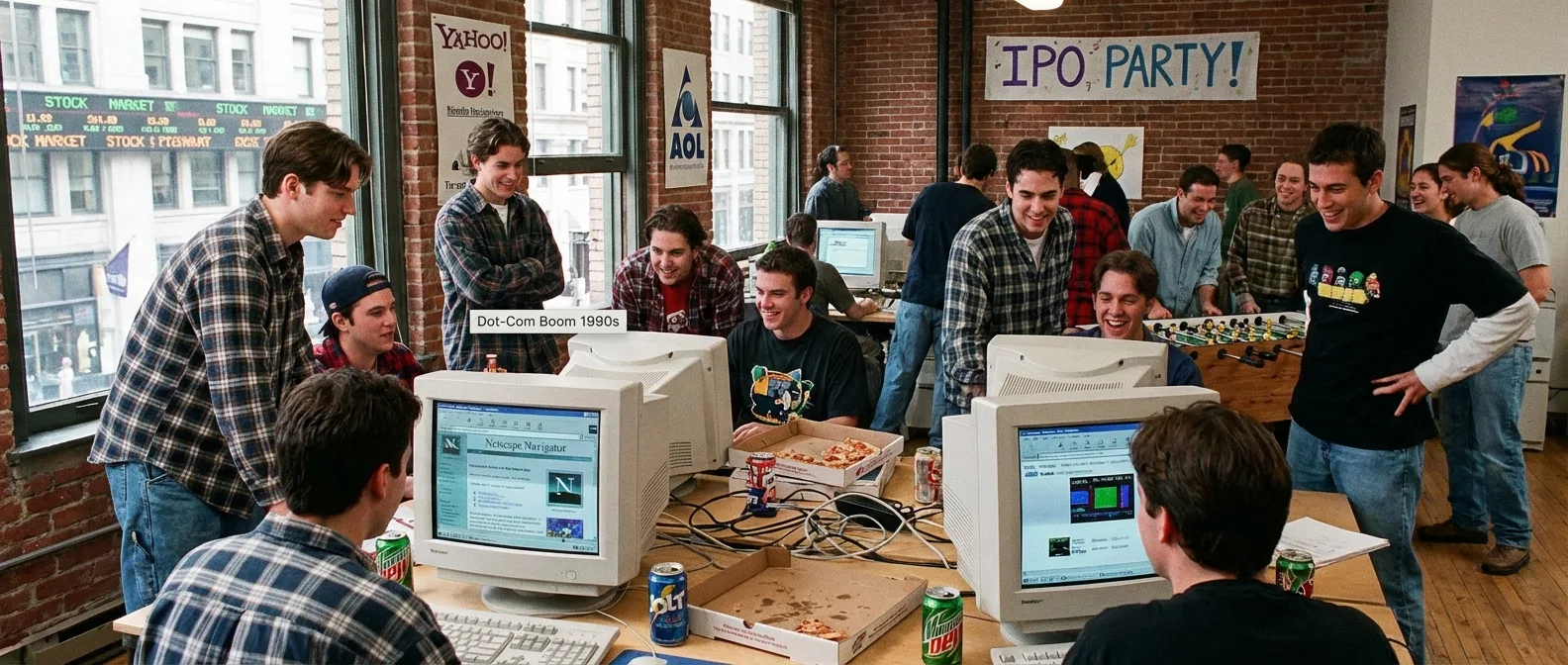
The Dot-Com frenzy — startups, IPOs, and the great bubble
If there is one decade that transformed the internet from an academic tool into a global phenomenon, it's the '90s. Three forces converge: commercialization, user-friendly browsers, and the bottomless optimism of investors.
1993: Mosaic and the Democratization of the Web
The browser Mosaic, created at NCSA (University of Illinois) by Marc Andreessen, changes everything. For the first time, a browser displays images inline with text (instead of in a separate window). It's free. It runs on Windows. Regular people start “surfing.”
In 1994, Andreessen founds Netscape Communications. Netscape Navigator dominates the browser market — until Microsoft launches the "Browser Wars" with Internet Explorer, bundling it with Windows 95. This war would ultimately lead to the antitrust lawsuit against Microsoft.
1995: The Commercial Liberation
NSFNET is retired and the last restrictions on commercial use are lifted. Now anyone can make money on the internet. That same year, landmark companies are founded (or go public): Amazon (starts as an online bookstore), eBay (online auctions), Yahoo! (web portal). The era of e-commerce begins.
📈 The Exponential Growth
From 16 million users at the end of 1995, to 361 million by 2000. This growth — 2,200% in 5 years — is unprecedented for any technology in human history. Neither television, nor the telephone, nor radio spread this fast.
1997-2000: The Dot-Com Bubble

March 2000 — The bubble bursts and the NASDAQ crashes by 78%
The frenzy reaches its peak. Hundreds of startups with names ending in ".com" receive billion-dollar valuations with no profits, no business plan, sometimes without even a product. The NASDAQ index skyrockets from 1,000 points to 5,048 in 5 years — a 400% increase.
The logic is simple and dangerous: “Buy now, profits will come later.” Venture capitalists pour millions into companies that have nothing but a domain name and a PowerPoint. Pets.com spends $300 million on marketing (including a Super Bowl ad) to sell dog food online — and closes after 268 days. Webvan burns $830 million on online grocery delivery. Boo.com spends $188 million in 18 months selling clothes. eToys is valued at $8 billion — more than Toys “R” Us, which had 1,500 stores.
💸 The Biggest Dot-Com Fiascos
On March 10, 2000, the NASDAQ reaches an all-time high of 5,048.62 points. And then? Free fall. Within 30 months, the index loses 78% of its value, dropping to 1,114 points. $5 trillion evaporates. Over 500 dot-com companies close. 100,000+ tech workers lose their jobs in the Bay Area alone.
"The bubble wasn't madness — it was simply the right idea on the wrong timeline. Almost everything the dot-com entrepreneurs envisioned came true — just 15 years later."
And yet, Andreessen was right. Webvan died, but today Instacart is worth $10 billion doing exactly that. Pets.com closed, but Chewy sells pet supplies online with $11 billion in revenue. Kozmo.com went bankrupt, but DoorDash dominates delivery. The ideas were right — the technology and market just weren't ready yet.
But the companies with real value — Amazon, eBay, Google — survive and thrive. The bubble was the internet's "natural selection": it kept the strong, cleared out the weak, and left behind the infrastructure (fiber optic, data centers, trained workforce) upon which today's digital economy was built.
🛒 Amazon (1994)
Started as an online bookstore in a garage. Today it's worth over $2 trillion and controls 40% of cloud computing worldwide.
🔍 Google (1998)
Two Stanford students created a search engine in a dorm room. Today it processes 8.5 billion searches daily.
🌍 The 2000s: Web 2.0 — The User Becomes a Creator
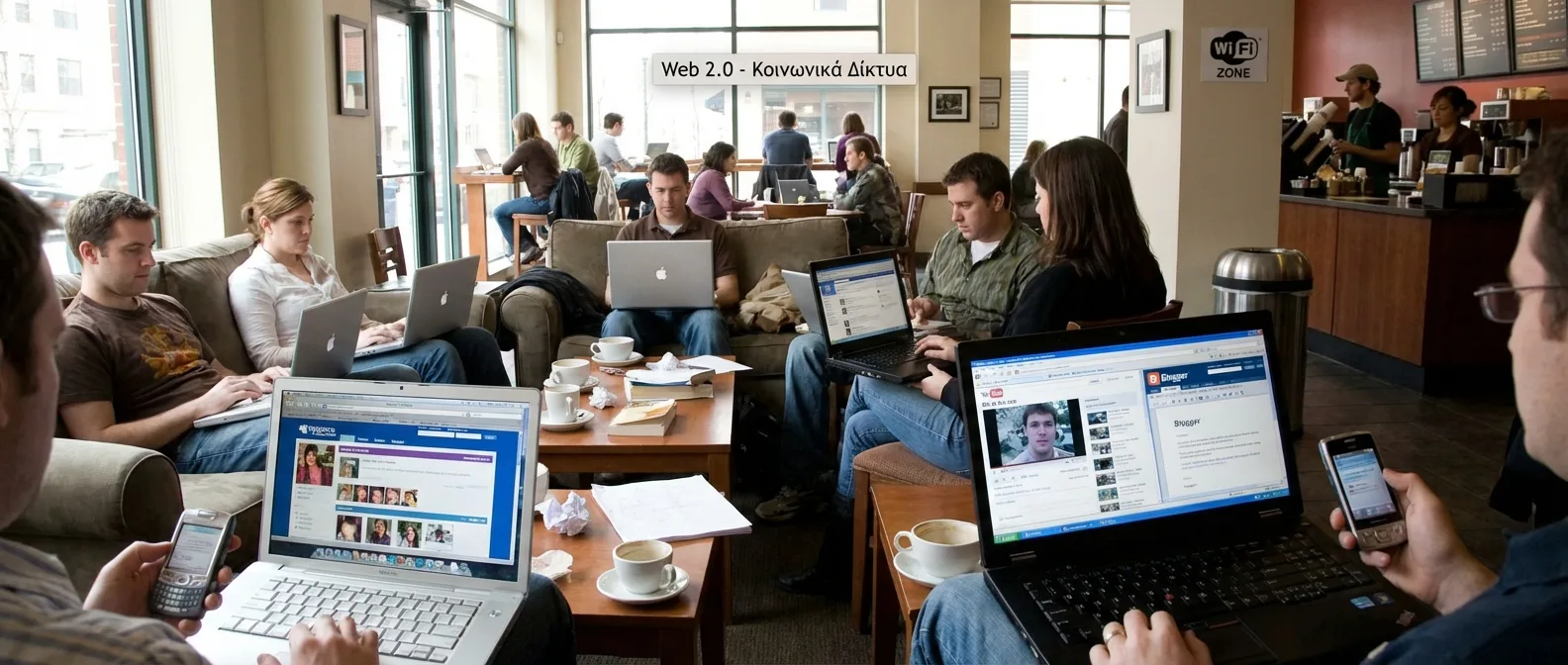
The Web 2.0 era — social media, blogs, and user-generated content
If in Web 1.0 (1990s) the user was a passive reader — pages like digital brochures — in Web 2.0 they become a creator. The change is fundamental: from “I read” to “I write, share, comment, create.”
🔄 Web 1.0 vs Web 2.0
The decade starts with momentum: Wikipedia appears in 2001 — the idea that an encyclopedia could be written by millions of volunteers sounds crazy, but it works. In 2003, LinkedIn and MySpace appear. In 2004, Facebook arrives (initially only for Harvard students). In 2005, three former PayPal employees upload the first video to YouTube — “Me at the Zoo,” 18 seconds at the zoo.
And then, in 2007, Steve Jobs takes the stage and presents “an iPod, a phone, and an internet device” — which turn out to be one single device: the iPhone. The era of mobile internet begins. Today, 62.73% of internet traffic comes from mobile devices.
📱 The 2010s: Dominance — Smartphones, Cloud, Streaming
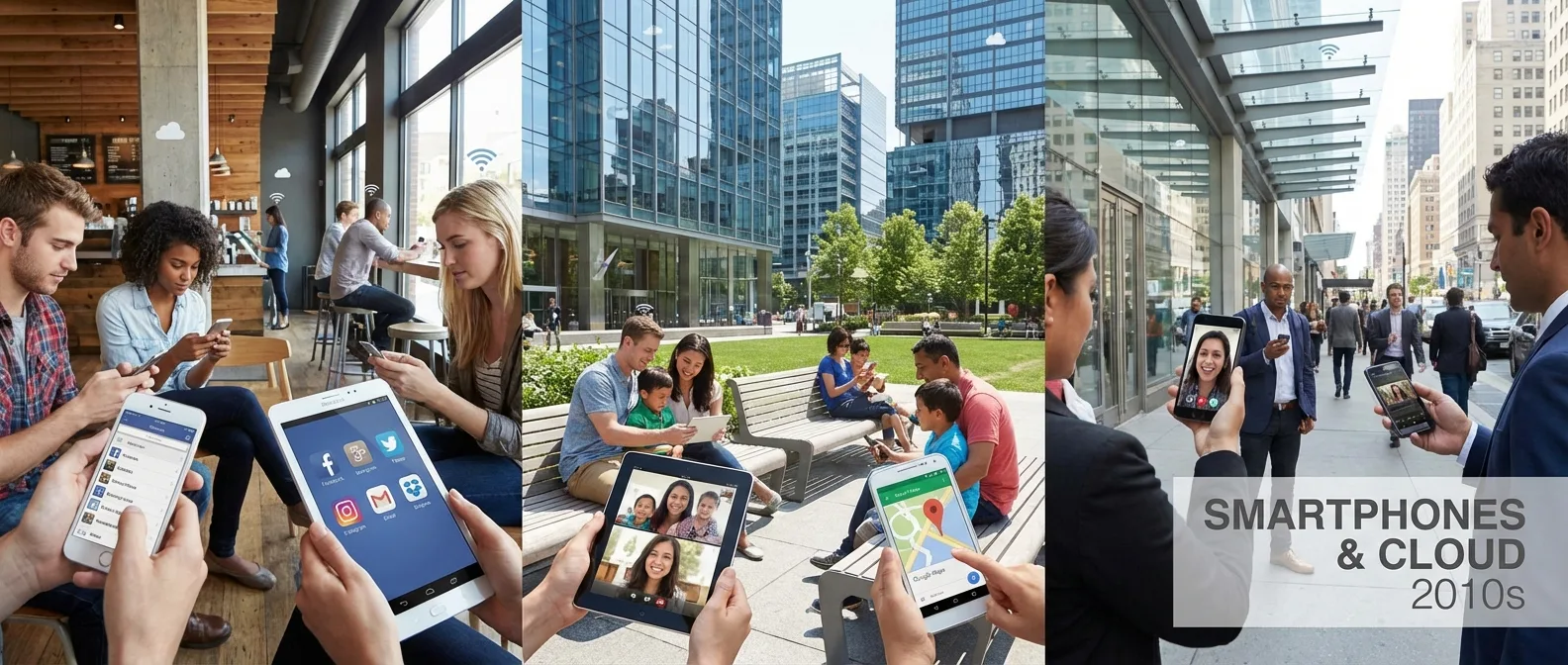
Smartphones, cloud, and streaming — the internet becomes the “air” we breathe
The 2010s is the decade when the internet stopped being “something we use” and became "the air we breathe digitally." Smartphones reach every pocket. Cloud computing allows startups to build services without expensive server rooms. And entertainment moves entirely online.
☁️ Cloud Computing
AWS, Azure, and Google Cloud change the way applications are built. You no longer need a datacenter — you rent computing power “in the cloud.”
🎬 Streaming
Netflix (streaming since 2007), Spotify (2008), Disney+ (2019) replace DVDs, CDs, and TV channels. Entertainment becomes on-demand.
🏠 IoT (Internet of Things)
From smart thermostats to cars, billions of devices connect to the internet. By 2025, over 15 billion IoT devices operate worldwide.
🔒 Cybersecurity
With power comes responsibility. Ransomware, data breaches, fake news — the dark side of the internet emerges and the need for protection becomes critical.
This decade also brings major societal questions: Do social media unite or divide? The Arab Spring (2011) shows the internet's power for democratic uprisings. But the Cambridge Analytica scandals (2018) reveal how data can manipulate elections. The internet is neither good nor bad — it is a mirror.
🤖 2020-2026: AI, 5G, and the Internet of Tomorrow
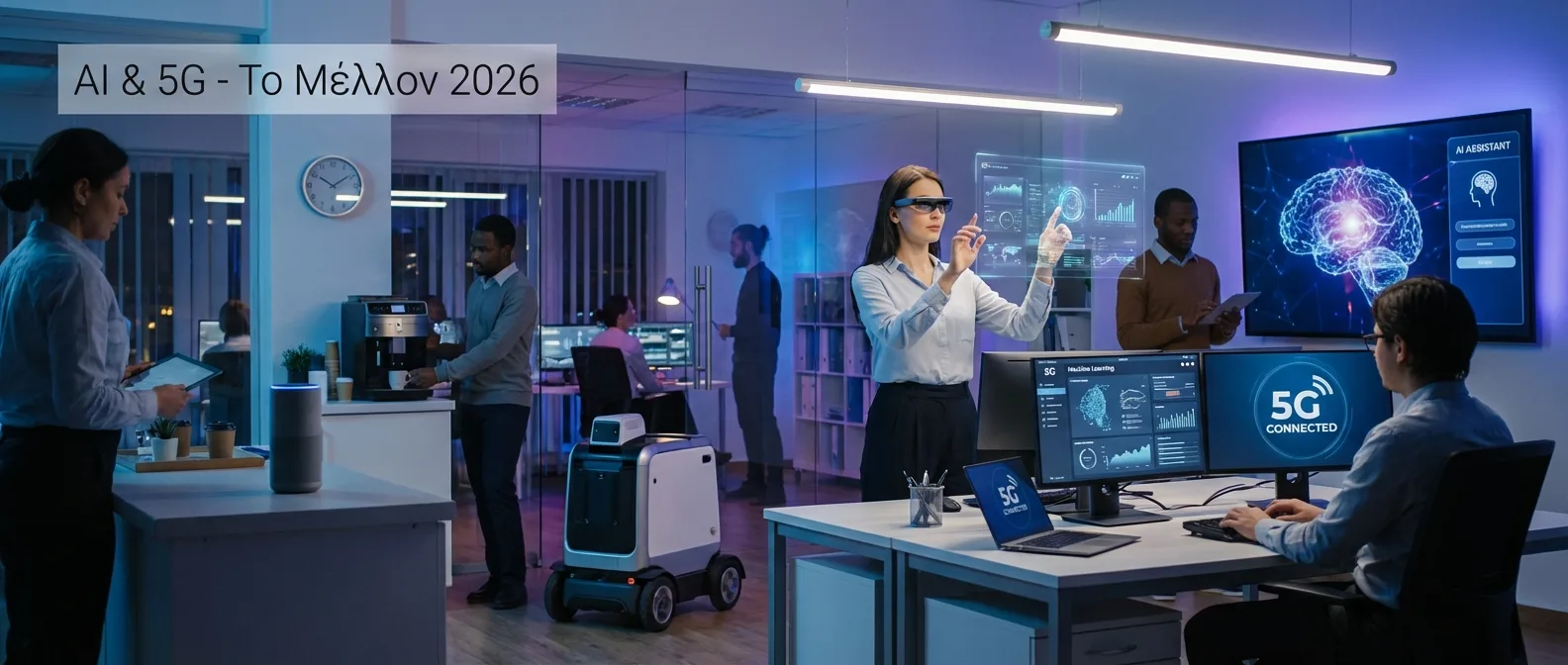
AI, 5G, and holographic displays — the internet of tomorrow is already here
The COVID-19 pandemic (2020) proves beyond any doubt that the internet is vital infrastructure — on the same level as water, electricity, and transportation. Millions of people work from home, schools move online, telemedicine skyrockets. Internet users increase by nearly 1 billion within 3 years.
The Artificial Intelligence Revolution
In November 2022, OpenAI releases ChatGPT — and the world changes again. Artificial intelligence, developing on top of the internet's infrastructure, begins to transform everything: from the way we write, to the way we search for information, to the way we create art. Google, Microsoft, Meta — all plunge into the “AI race” that will define the next 20 years.
5G, Fiber Optic & Starlink
5G networks promise speeds up to 20 Gbit/s — 400,000 times faster than the 1969 ARPANET connection. Fiber optic networks expand worldwide, while satellite networks like Elon Musk's Starlink bring internet to remote areas — from villages in Africa to ships in the middle of the ocean.
🌐 The Digital Divide — The Great Challenge
Despite 6+ billion users, nearly 2.7 billion people still don't have internet access. South Asia and Sub-Saharan Africa remain the least connected regions. North Korea has a penetration rate of just 0.1%. Bridging this divide is the greatest technological and moral challenge of our era.
📅 Complete Timeline: 57 Years of Internet
⏳ Milestone Timeline
🎯 From 4 Computers to 6 Billion Users
If someone had told Leonard Kleinrock on that October evening in 1969 — as the word “LOGIN” crashed on the third letter — that in 57 years over 6 billion people would be using what he had just created, he would surely have laughed.
And yet, here we are. A network that started as a military experiment became the greatest public good humanity has ever created — a good that belongs to no one and belongs to everyone. The history of the internet hasn't ended — it has just begun. With artificial intelligence, 6G networks, and technologies we can't even imagine, the next 57 years promise to be even more extraordinary.
"The Web, as I designed it, is a universal space. Its value lies in its universality. If there's something you can't find on the Web, then the Web isn't working."